
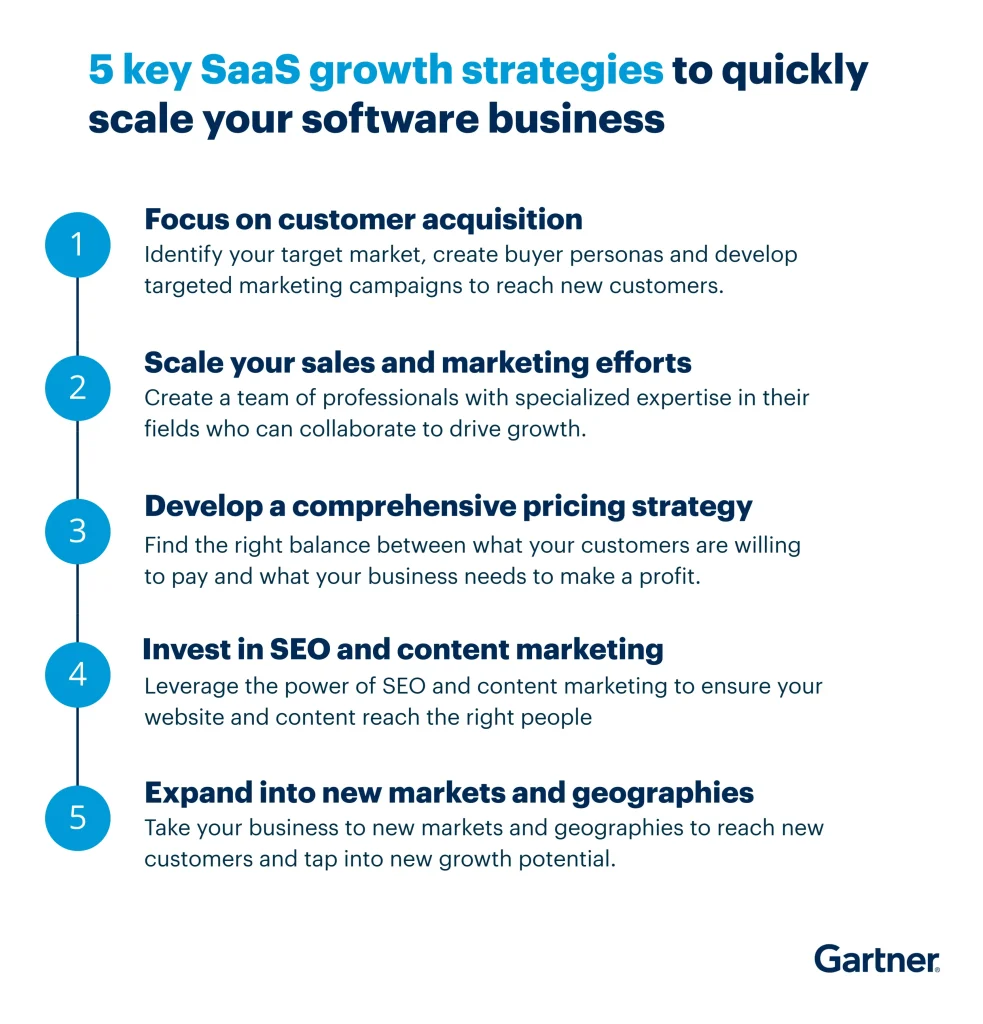
A strong SaaS strategy is the backbone of turning a bright idea into a scalable product that serves real customers. In today’s cloud-first world, building scalable SaaS means more than just shipping code; it requires a disciplined approach to product development, customer outcomes, and sustainable growth. This introductory guide highlights core elements from validating the concept to designing a scalable product, SaaS pricing strategy, and a go-to-market plan. By weaving SaaS product development insights with actionable metrics, you can align teams around outcomes customers value. From MVP for SaaS to expansion, this framework helps you forecast growth, optimize costs, and reduce churn as you scale.
A cloud-native, subscription-based approach to software converts value into a repeatable growth engine for customers and the business. This lens emphasizes customer outcomes, pricing models, and a scalable architecture that supports rapid iteration and smoother updates. Think of a minimum viable product as a learning engine—quick prototypes, user feedback, and data-driven pivots that inform product development and market moves. A strong emphasis on automation, security, and self-service capabilities underpins reliability and lowers friction for newcomers. When this holistic view links product, pricing, and delivery to measurable outcomes, growth becomes sustainable and predictable.
SaaS Strategy Essentials: Aligning Product, Pricing, and Go-To-Market for Sustainable Growth
A strong SaaS strategy coordinates what you build, how you price it, and how you reach customers. It starts with a clear problem statement and audience, then translates insights into a plan for SaaS product development that prioritizes features with measurable impact while keeping an eye on scalability and cost control. It also requires a go-to-market plan that aligns with customer outcomes, ensuring the product roadmap, pricing, and sales motions move in concert.
In practice, this means choosing an architecture and development approach that scales—modular design, API-first thinking, and observability—so you can deliver updates with minimal disruption. It also means defining pricing and packaging early, testing value across segments, and building a measurement framework with metrics that reflect activation, retention, and expansion. A scalable SaaS architecture—and a disciplined approach to customer value—helps sustain growth while preserving reliability and cost efficiency.
From MVP for SaaS to a Scalable Go-To-Market Plan and Pricing Strategy
The MVP for SaaS is not the finish line; it’s the learning engine that validates your core value and willingness to pay. Start with a lean, testable feature set and use qualitative interviews and quantitative experiments to gauge demand, adoption, time-to-value, and potential retention. Through this, you shape a go-to-market plan that matches buyer journeys, while refining the initial pricing concepts to reflect the real value delivered.
As you move from MVP to a scalable product, the emphasis shifts to pricing strategy and GTM alignment across channels. Build a roadmap that expands use cases, introduces tiered plans and, if appropriate, usage-based pricing, and tightens the feedback loop between product development and customer success. With disciplined execution, your SaaS product becomes scalable SaaS, supported by a robust go-to-market plan, a clear MVP for SaaS, and ongoing optimization of growth and profitability.
Frequently Asked Questions
How does a well-defined SaaS strategy shape the MVP for SaaS and the go-to-market plan?
A well-defined SaaS strategy guides the MVP for SaaS and the go-to-market plan by aligning product development, pricing, and channels with a clear problem statement and target buyers. Start with the MVP for SaaS to validate core value and willingness to pay through rapid prototyping, user interviews, and experiments. Use activation, time-to-value, and early usage metrics to assess demand and retention. Let learnings drive feature prioritization and iterations of the go-to-market plan, including messaging, channels, onboarding, and pricing tests. Maintain cross-functional alignment across product, marketing, sales, and customer success and establish a metrics-driven feedback loop to optimize growth and retention.
What are the key considerations in a SaaS strategy for building a scalable SaaS with a clear SaaS pricing strategy and robust product development?
The core is to integrate SaaS pricing strategy with product development to enable scalable growth. Start with value-based pricing using tiered plans, usage-based options, and annual contracts to improve predictability and expansion potential. Align pricing with the SaaS product development roadmap: design for modularity, API-first interfaces, and scalable infrastructure (multi-tenant or single-tenant) to support scalable SaaS growth, with robust CI/CD and automated testing. Invest in self-service onboarding, security, data governance, and compliance. Coordinate a go-to-market plan so pricing tiers map to buyer personas and sales motions. Finally, track MRR, ARR, churn, CAC, and CLTV, and feed insights back into the roadmap to sustain long-term growth.
| Aspect | Key Points |
|---|---|
| Defining the SaaS Strategy. | Align product, pricing, sales, and operations with a clear problem statement and target audience. Identify who gains value, what makes the product unique, and how customers pay, deploy, and renew. Start with customer insight, market sizing, and competitive landscape; translate into a scalable plan prioritizing features with measurable impact while maintaining scalability and cost control. |
| From Idea to MVP: Validating Core Assumptions. | Validate core hypotheses about customer value and willingness to pay. Launch with a simple, testable MVP; use rapid prototyping, user interviews, and quantitative experiments to assess demand, adoption, and retention. Track activation metrics (activation rates, time-to-value, early usage) and iterate; adjust go-to-market based on learnings about buyers, influencers, and decision-makers. |
| Product Development and Architecture for Scale. | Decide early on multi-tenant vs single-tenant; plan for data isolation, security, and regulatory considerations. Build a scalable architecture that supports rapid deployment, automated testing, and seamless upgrades. Embrace modular design, API-first thinking, and CI/CD. Weigh microservices vs. a monolith and design for growth with emphasis on performance, reliability, and observability (uptime and incident response). |
| SaaS Pricing Strategy. | Pricing should reflect value, be easy to understand, and allow growth. Use tiered plans, usage-based options, and annual contracts to improve retention and forecastability. Align tiers with customer segments; consider freemium/free trials to attract early adopters and provide a frictionless upgrade path. Use usage-based pricing where appropriate, conduct regular price reviews, justify changes by value delivered, and communicate feature availability to minimize churn. |
| Go-To-Market Plan. | GTM is a cross-functional effort across product, marketing, sales, and customer success. Start with buyer personas, pain points, and decision processes; craft messaging that resonates across channels and demonstrates measurable outcomes (time saved, revenue uplift, risk reduction). Leverage content marketing, SEO, webinars, and product-led growth to attract qualified leads. Tailor the sales motion to your market (self-serve, inside, field) and align with pricing. Prioritize onboarding and customer success to improve retention and CLV. |
| MVP for SaaS. | The MVP is a learning engine, not the end state. Launch with the smallest validated feature set and use customer feedback and usage data to drive incremental improvements. Prioritize features that unlock critical value, reduce time-to-value, and enable expansion. As you scale, focus on onboarding, tutorials, and in-app guidance to help users realize outcomes quickly; early customer success stories become assets for refining GTM and future product work. |
| Operational Excellence: Metrics, Monitoring, and Iteration. | Rely on a data-driven set of metrics: MRR, ARR, churn, CAC, CLTV. Measure activation, adoption, expansion, and renewal rates. Implement frequent, actionable health checks and a telemetry strategy with dashboards for performance, security, and reliability. Maintain a strong feedback loop with customers to inform priorities and course-correct early; cultivate a transparent, metrics-driven culture to build trust. |
| Roadmap to a Scalable Product. | Transform an MVP into a scalable product with a planned roadmap. Early milestones should scale infrastructure, refine pricing/packaging, and expand the go-to-market engine. Plan feature expansions to broaden use cases, integrate with popular tools, and deliver greater value across departments. Balance speed with a disciplined release process; invest in automation and self-service, and strengthen security, data governance, and compliance as the user base grows. |
| Common Pitfalls and Best Practices. | Avoid feature bloat, misaligned incentives, and inconsistent pricing. Prioritize value over feature quantity and demonstrate ROI. Invest in onboarding and customer success to reduce churn and increase net revenue retention. Build scalable deployment, monitoring, and support processes to maintain reliability as you grow. Embrace customer-centricity, validate assumptions through experiments, and keep a tight feedback loop between product and customers to balance speed, quality, and value for sustainable growth. |
Summary
Conclusion: A well-executed SaaS strategy ties together product development, pricing, GTM, and ongoing optimization to turn a bright idea into a scalable business. By validating MVPs, designing scalable architecture, choosing value-based pricing, and building a strong go-to-market engine, teams can accelerate growth while delivering measurable customer value. The process is iterative and data-driven: learn from early adopters, continuously improve onboarding and product-market fit, and align cross-functional teams around shared metrics such as MRR, churn, CAC, and CLTV. A disciplined roadmap, robust security and compliance, and a relentless focus on customer outcomes help sustain revenue growth and reduce risk. In short, a thoughtful SaaS strategy translates insights into scalable execution, enabling sustainable expansion across markets and use cases while preserving reliability and user satisfaction.